We’ve been on quite a journey at Mugwort Cottage to find the best Natural Insulation for our needs. Below is a brief summary that lead us to choose Hemp Wool Batts from IndiNature
NATURAL INSULATION- Part 1- Strawbales
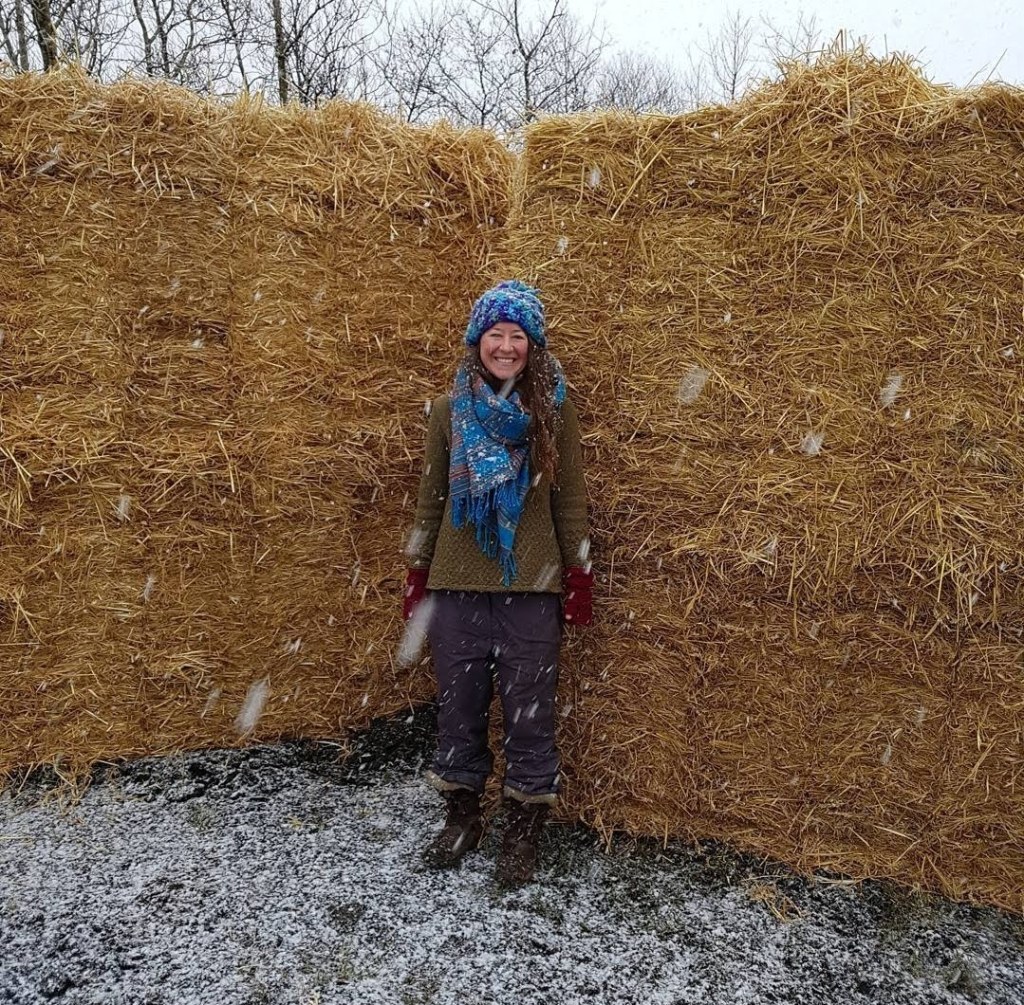
We have the rare privilege of living in a pilot version of @mugwort.cottage while we’re building it. This was designed by Ally & her architect in 2015/16 and construction began in 2017. Ally accidentally project managed this. (First time)
Tiny house (pilot) is insulated with strawbales (infill), and every part of that project was done by well-meaning people who had never worked with straw before, so it was a high learning curve.
Pros: sourced locally, low cost.
Cons: bales weren’t uniform, so installation was challenging, we struggled to get details right, and all the little critters crawled out of the bales and through the light fixtures & wall plugs for 2+ years.
NATURAL INSULATION- Part 2- Sheep’s Wool
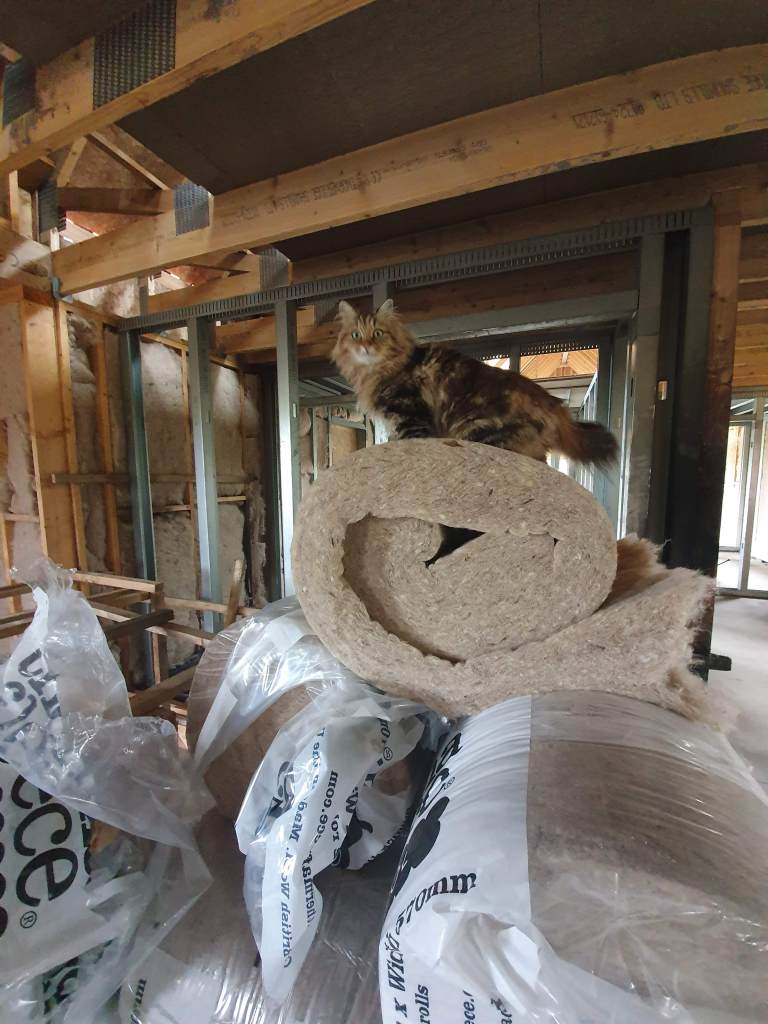
In 2019, Ally (again & accidentally) project managed another eco build on site. This time, we chose to work with sheep’s wool insulation.
Pros: it was easy and pleasant to work with and smelled like a barn (we liked that).
Cons: higher cost, we are we are starting to find clothes moths (it’s a public building without many soft furnishings, so something that came with the insulation or sneaked in during construction) and mice have got in and love the insulation.
Kitty, site supervisor, also loved the sheep’s wool.😅
NATURAL INSULATION- Part 3- Strawbales (again)
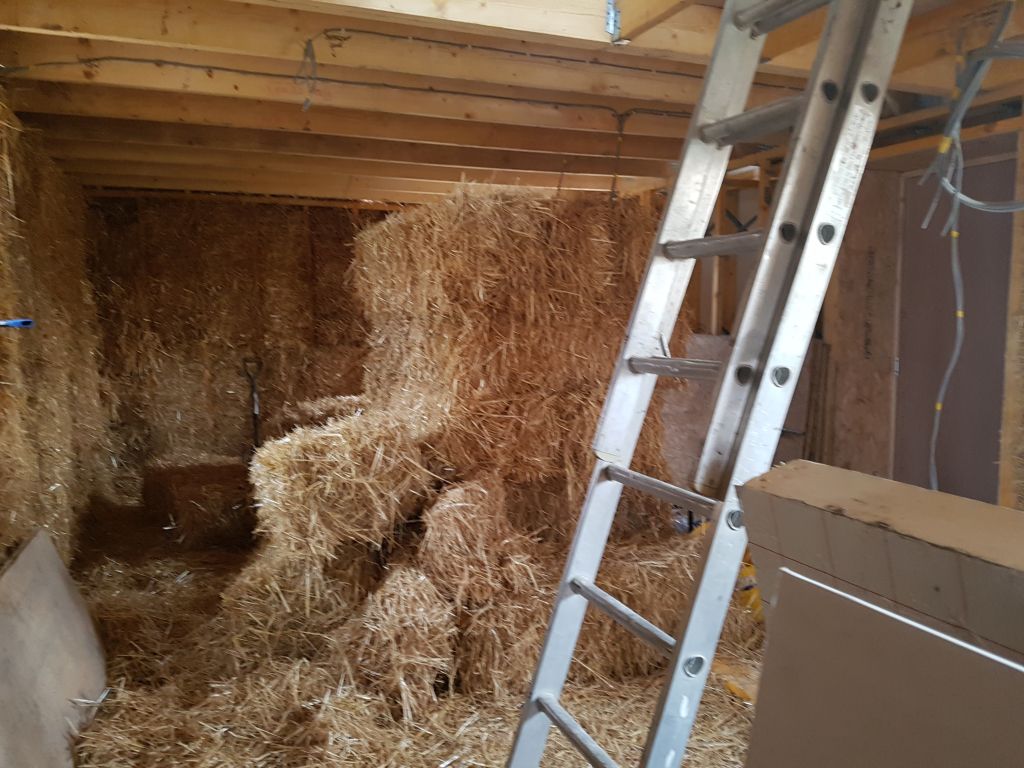
After trying 2 different natural insulations, I had my heart set on going back to straw and actually finishing the inside with the beauty that clay render can offer (tiny house had a plasterboard interior finish). We are basing @mugwort.cottage on tweaks we were making to tiny house.
I learned the very basics of sketchup and completed a VERY ROUGH model that had the internal dimensions we were after with a rough guess for the wall thicknesses. We specifically sought out an architect that works with natural materials and also who had worked on a load-bearing strawbale project in Scotland @wellspringarchitecture. Matt was fantastic & took my ROUGH stetchup and fit it to strawbale sizes, and also made it look good.
We were in a little bit of a planning crunch, and while we had a solid enough idea of what we were after, we were really at the beginning of figuring out some details, a big one was insulation.
We decided to have the house on columns like we had done before with Tiny House (pilot) and to go to planning with straw bale wall thicknesses. This meant if we changed our minds down the line, the house would never be getting taller or wider, only shorter and narrower, so the external size would be fine for planning. We applied for planning early December 2022. A little over 5 months (and one million expensive reports😅) later we got the fantastic news that we had planning permission.
NATURAL INSULATION – Part 4- Hemp Wool
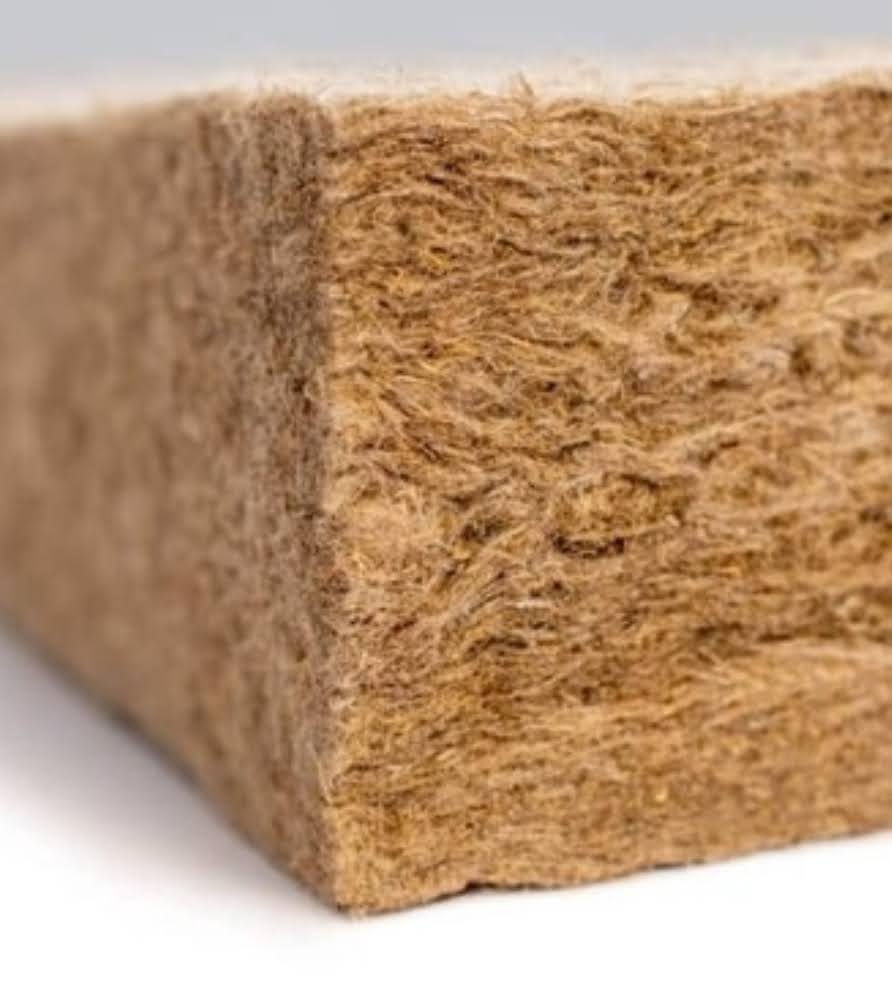
I had my heart set on total natural insulation, and that being straw. G was more interested in products that had higher insulative qualities & didn’t take up as much space, like rock wool or glass wool. He was also very interested in ease of instillation & all the bits that go around it.
After looking at their various qualities of those, I was still sold on straw. At this stage, G said you can absolutely build with strawbales, but you’ll be on your own. I’m not building with straw bales in Scotland and fighting with the weather and all the work that comes with straw (protecting from wet & all the coats of plaster & work needed to gather materials). While cheaper in money, it has a very high cost in time.
I knew full well that I couldn’t do it on my own, even with lots of folks offering to help. Back to research.
We looked at a few pre-fab options. Some with straw, some with hemp & some with cellulose, but the cost of those was too high for us. It was then that we stumbled across hemp wool batts.
NATURAL INSULATION- Part 5- Hemp Wool
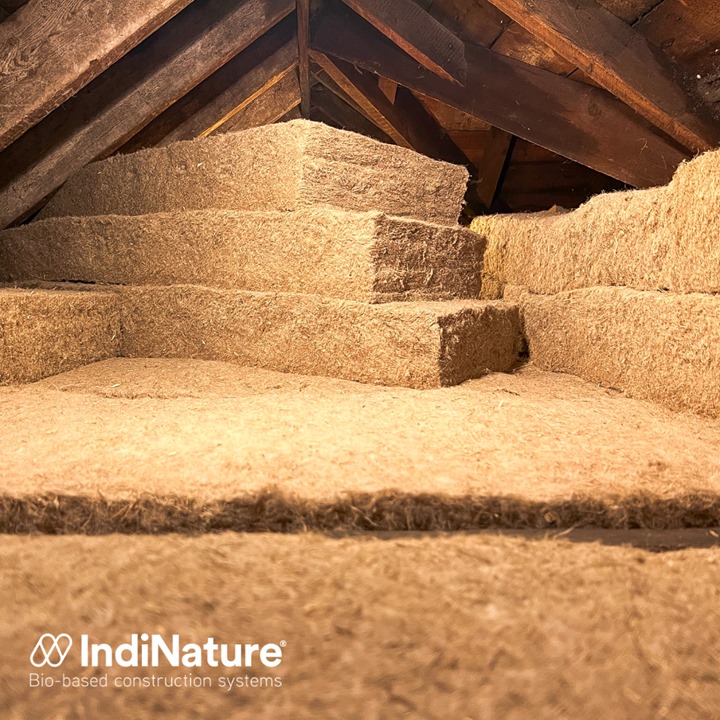
So hemp wool, eh?
Cons: need a lot of insulation to get needed U values, a different wall construction to hold it, and it costs more than strawbales😅!
Pros: decent insulative quality (on par with sheep’s wool, rock wool, glass wool & sisal wool), easy to work with (we’ve heard, well keep you posted😉), easy to grow (grows & is manufactured in Scotland), plenty of finishing options to work around it with, and our favourite: pests & rodents don’t like it.
That’s a lot of pros, and for us we were sold. Indinature here we come!
To fit the thick insulation needed, we’ve decided to go for a double wall construction with the space between insulated. We’ll have a nearly continuous layer of insulation, 300mm thick! The walls won’t be as thick as what we’d planned with straw, so we gain a little internal space (which allows us to squeeze in a straight stair🙌).
It’s been a journey for us to find a natural insulation that works for us, and we’re both really happy with hemp wool and all that it offers.
If this is something your considering, find us on insta @mugwort.cottage and give us a shout with any questions!
 Mugwort Cottage